dinsdag 1 december 2009

Evelien: ‘Borders goes into administration’


After many success stories of companies who found a solution for their financial problems, mainly caused by the economic downfall, I’d now like to highlight that even big companies with a fixed value can fail their corporate finance.

The Borders bookshop chain in the UK, which employs 1,150 people, has lost the battle. The company suffered from increased competition from online retailers and supermarkets. Further, they faced severe cash flow pressures.

Due to several credit insurers who had reduced their cover to Borders, some of their suppliers became less willing to trade with them and stopped or reduced its credit.

This all made it really difficult for Borders to fill up its stock levels, which decreased its customer service and lead to declining revenues.

Borders tried to survive by seeking for a buyer for all or some of their outlets, but they couldn’t reach their goal.

Borders is a typical example to say that credit insurance is a symptom of a business in jeopardy, in a dangerous situation.


I believe that Borders failed their corporate finance because they hadn’t enough reserve to bridge periods of less credit. They had to foresee that this could happen, definitely when you’re in a branch with growing competition.

Of course not everything is due to the decreasing credit insurance. When the traditional bookshop became less popular and cheaper alternatives like supermarkets got more attention from the customers, Borders had to intervene.

Borders’ marketing department should have used their creativity to come up with new ideas and strategies to attract their customers by new or better services.

As a business you always have to create value for your customers or they will turn their back on you. The bankruptcy of Borders is due to a mix of human miscalculations.

Nowadays, innovation is the key to a long and successful story. Consumers are more demanding than twenty years ago. They expect to buy the latest cell phone and one month later, they want to find a more updated version. The most expensive television or car isn’t as exclusive after a while than it was at the time of purchase.


By Evelien Van Gaeveren

Source: BBC NEWS, ‘Borders goes into administration’. BBC News, November 26 2009, www.bbc.co.uk.

maandag 30 november 2009

Livine: Businesses in U.S. Brace for New Rules on Emissions

I’ve chosen for an article about the reducing of the emissions that cause the global warming. I think that’s a very interesting article because it’s important for our future, health and the planet. It’s also a very active topic.

The companies have waited a long time for the day that they would be obligated to reduce their emissions who cause the global warming. Wednesday 25/11/2009, President Obama has proposed a national goal for such reductions.

A lot of American companies have already thought what they should do to achieve these standards. Many have made their conclusion years ago that it’s unavoidable that they must do something and they wanted to know what exact rules there are. Many companies have registered their emissions to analyze their results. Some of them have already made notable progress.

Big companies as General Electric, Ford Motor Company and PepsiCo have worked with environmental groups to found the United States Climate Action Partnership, an association where they can look for solutions to decrease the emissions in the whole economy.

Mal-Mart, the biggest retailer, has outlined strict targets to rebate the energy consumption in his stores and he has given thousands of his suppliers the instruction to report their energy consumption and their carbon dioxide emissions.

Duke Energy, a power company says that clear rules are necessary to make sure that all the companies who are familiar with coal-fired power plants can finance their transition to lower carbon fuels, natural gases or nuclear energy.

The leadership of the White House is required and the only way to get a bill by the Senate. A bill means certainty and clarity and this is what the companies need.

Until now, the U.S is the only industrialized economy who fairs the targets for reducing the greenhouse. Limiting the greenhouse means the anguish of the energy-intensive companies like petroleum refineries and coal-fired power plants and elucidating the development of alternative energy like sun and wind. The U.S claims that this will lead to higher energy costs and petroleum accounts, less domestic production and an increase of fuel import and a slower growing economy.
Luckily, their are still some companies like Apple and Nike who contradict this and support the reduction of the emissions. They think that its urgent time for changes and that the companies have to take control and should invest in sustainable business and have to look for innovative solutions.

There are many projects but there’s still no agreement that can ensure that the targets of the President will be pursued.

I agree with Apple and Nike, it’s in the hands of the companies and they need to do something before it’s too late and it’s in the interests of everyone. So the companies have a great responsibility. We just live ones so we have to take care for our planet and think at our children and their future.


You can read the article on: http://www.nytimes.com/2009/11/26/business/energy-environment/26emissions.html?scp=5&sq=corporate%20finance&st=cse


Greet!
Livine

zondag 29 november 2009

Lien: "Stagecoach books its seat as Spanish Group raises bid for National Express"

For my final blog on corporate finance, I have read an article dealing with a part of corporate finance that hasn’t yet been talked about that much; namely ‘takeovers’.

The British transport operator, ‘National Express’, is thinking about selling its business after having to endure some difficult times with poor financial results, losses etc. which have pulled down the value of its shares.

Amongst the investors, is the company’s biggest shareholder, a Spanish group, which has already made an offer, but which has now raised its final offer after first being rejected. Their plan is to buy the company and then again sell a part of it to National Express’ competitor, Stagecoach.

National Express however still doubts and is also considering another option. It would try to get out of (a part of) its debts by issuing rights worth £ 350 million. This might be a more difficult option because of for instance its low share prices.

Opinions about the takeover are still very diversified and the company just wants to have time to consider all of its options.

For my last blog, I found this article to be again very interesting. It shows how a company can get in such big financial troubles that they are unable to get out of these problems themselves, so they have to seek help in more desperate measures. One of those measures can be selling (a part of) your company. Then again, this might be the only way to insure that your company will survive and to still wake away with some money yourself.

In the case of National Express, I suppose it would be the right thing to do. The rights issue that they are considering would be too dangerous. Maybe the shareholders would consider buying new shares to save the company. Then again, not all of the money can come from existing shareholders and that is where the biggest problem would be, I suppose. Maybe the price of the shares is too low to attract enough new investors. Overall, in my opinion, the takeover is the best way to save the company from its debts.

I find this article to be a good last article about corporate finance, because you don’t only have the aspect about how a company gets a part of its capital, by issuing shares, but also the part in which they describe what a company’s options are when its financing gets into trouble. For instance by selling the company or issuing new rights.

Thank you for reading this blog the last couple of weeks!

Greetings,

Lien

Article: “Stagecoach books its seat as Spanish Group raises bid for National Express”

Source: http://business.timesonline.co.uk/tol/business/industry_sectors/transport/article6820976.ece Date: 4th September 2009

zaterdag 28 november 2009

Annelies: Lending Declines as Bank Jitters Persist

Lending Declines as Bank Jitters Persist

Summary
U.S. lenders saw loans fall by the largest amount since the government began tracking such data, suggesting that nervousness among banks continues to hamper economic recovery.

The total balance of the loans was 210.4 milliard dollars of the third quarter. It was the greatest decrease since 1984 according to the Federal Deposit Insurance Corp (FDIC).
It’s the second time that there are a lot of bank failures.

Despite the large sums of money the banks get from the government to avoid bankruptcy, they are reluctant to lend.

The large banks, which account for 56% of industry assets and received a large share of the government’s bailout funds, accounted for 75% of the decline.

Credit availability plays an important role in the recovery of the economy. Therefore the banks must give loans especially to business clients.

James Chessen, chief economist at the American Bankers Association, said that there are less credit loans because the lenders run the risk of losing their money. They are reluctant to take the risk. They are more prudent to lend.

FDIC officials don’t disclose the names of banks on the list, in part because it could lead to bank runs.

In spite of the balance financing is negative, they had a reserve of cash. With this cash money they would save their failures.

FDIC officials recently agreed to require banks to prepay three years' worth of government insurance fees, which is expected to bring in an additional $45 billion by the end of the year.

Ms Bair, chairman of the FDIC, said that there wouldn’t be a profit for the fourth quarter because there are more write offs and bad loans before the year-end.

My opinion
Everyone knows there is a financial crisis. Many banks have lost money. Some of them went bankrupt. I find it normal that the remaining banks are reluctant to lend because they have become more prudent. However, the lack of credit availability is bad for the economic recovery. So it is important that this situation doesn’t last.

I think it is a good thing that governments in the US and in other countries have spent hundreds of billions of dollars to help the banks. This creates stability and more security for the banks. I can also understand that despite this financial help, the banks remain prudent to lend money to companies as long as the economic crisis continues. However, there are signs that the economy is stabilizing. In previous articles I learned that there are signs that the crisis is past its peak. Still the banks are not inclined to give more loans. I find that the banks should take up their responsibility as key agents in the economy. If they are not prepared to do so, the economic crisis will go on for a long time. I find that in that case governments must take measures to oblige banks to give more loans to companies.

Greet Annelies

Source: http://online.wsj.com/article/SB125907631604662501.html

dinsdag 24 november 2009

Annelies: Workers act to avoid business closures

Workers act to avoid business closures

Summary
During the financial crisis a lot of companies have to close. Employers and employees work together to prevent their company from closure. On the one hand employers act to avoid business closures. On the other hand one in three workers has worked longer hours without extra pay.
A survey commissioned by the insolvency trade body R3 has shown that about 15% of the employees have accepted a pay freeze or they haven’t requested a pay rise.

During the financial crisis many companies have tried to save jobs. Employers pay lower salaries. In return they try to limit personnel reductions. It is the first time that employers are aware of the negative effects of massive compulsory reductions. They realize that when you want to keep your workforce happy, you don’t try to dismiss as many people as possible.

In spite of the workers acting to avoid business closures, there still are a lot of discharges. Some companies just don’t have enough money to pay all their employees.
Last week's unemployment figures showed the smallest rise since spring 2008. This result indicates that the worst of the recession may be over. However, the CBI said nearly two-thirds of the employers installed a recruitment freeze. 45% had introduced more flexible working.

Perhaps surprisingly, given the public outcry over bonus payments, the R3 survey has shown that only 10% of eligible workers were not paid a bonus that they would otherwise have expected to receive.


My opinion
I think it is very good that employers and workers work together to avoid business closures. I believe it is good news that especially employers try to limit compulsory reductions as much as possible. This was not the case during the 1990s recession. Employers realize more and more that they must prevent massive staff reductions as much as possible to keep their work force happy. During the financial crisis workers also realize that they have to do overtime and they must accept a pay freeze so that their employer is not forced to dismiss them.

It’s a pity that there still are a lot of employers who have to discharge some of their employees.

I find it odd that some workers still receive bonuses, while at the same time there are people who are discharged because their company can’t pay these people. Bonuses cost money also, don’t they?

Many companies have to be closed because their financial means are insufficient. I think that the companies will learn from this crisis. For some of them it is too late. But other companies will be more careful in the future. They will also try to maintain their workforce as much as possible. At least I hope so.

Great Annelies


Source: http://www.guardian.co.uk/money/2009/nov/19/workers-avoid-business-closures

maandag 23 november 2009

Livine: Accounting irregularities may be on the rise in U.S.

I’ve chosen for an article about the accounting fraud in companies because of the economic crisis.

There come more and more accounting irregularities to the surface in the U.S because of the persistent recession.

The shares of Apollo Group Inc are decreased with 18% after they had announced an informal investigation concerning their revenue recognition. Apollo is just one of many big companies who have published that they have accounting issues lately.
The Internet retailer Overstock.com have also noted that they were investigated by the government regulators related some expenses. The company changed their results in 2006 and 2008.

Statistically, you can see that there is a recession and that there is a higher financial pressure on companies. The employees are also motivated to exaggerate and fiddle with the accounting or to fraud to achieve some objectives, certainly in these difficult economic times.
Almost a third of the corporate executives expects that fraud and misbehavior will increase in companies this year. The most financial adjustments are related to costs, expenses and revenue recognition problems.

Investors usually don’t know that there is something wrong because the information is often vague. Because of this, it has a minimum impact on the share prices until the investors really know what’s going on.

A reason whereby there are more and more accounting irregularities who come to the surface is that it’s almost the end of the year and companies should close their books.
Regulators at het SEC and other government audit institutions can cause an increase of the detection of fraud because they focus on investigating tips.

Unfortunately, there is still too much latitude in the universally accepted accounting principles and companies because there is so much at stake whereby they grip what they can to fix their figures.

I think that the people and companies are so discouraged that they would do anything to ‘safe’ the situation. If you had a company and the figures are suddenly increasing a lot because of the economic crisis, I think that many would be dismayed and would be able to do such stupid things like fiddle with the bookkeeping. This is a normal reaction of many people but not the smartest one and certainly not without consequences.

These things will definitely happen all the time, also in better economic times but there is off cause more and stringent investigation when it goes economically worse and auditors will faster have questions with some figures whereby they double check it and in this way fraud gets detected.

You can read the article on: http://www.reuters.com/article/ousiv/idUSTRE59S01I20091029?pageNumber=2&virtualBrandChannel=0


Greet!
Livine

Lien:"Companies' share buybacks may hit a wall"

When I was browsing the web in search of a topic for this week’s blog, I came across an Indian site: economictimes.indiatimes.com. It’s an economic site, mostly covering the Indian and global economic events. I read an article about a very interesting phenomenon that is progressing in the Indian economy. Many listed Indian companies are trying to buy back the shares they’d initially offered on the share market.

As a cause of the bad financial time the economy has had to endure the last few months, the share prices on the Indian stock market have also dropped a lot. By buying a part of these shares back, the companies want to diminish the number of shares on the market and keep control of the majority of the shares.

Another reason for this buyback may also be that the company isn’t interested in the shares at all, but that they just want to bring up the share prices by announcing that they will buy back shares. Because of the announcement and people’s reaction to it, share prices might go up.

The buybacks are mostly not a success at all, because the price that the companies offer to buy back the shares, lays mostly lower than the price of the shares on the market at that time. India Inc for instance had announced 62 buybacks, of which 40 have already been dismissed because of a lack of success.

I was actually surprised to read such an article, because you might think that in a time of crisis, or especially in a recovery period, companies are looking for fresh capital to bring into their businesses and to re-launch their business practices to the fullest. In one of my first blogs, I already wrote about a capital increase by which the company planned to raise more money to invest in new ideas, but here, it is just the other way around.

I do understand that when share prices are low that companies might do such a thing as described in the article, because otherwise another company might step in a buy a majority of the shares at a cheap price. A company doesn’t want to lose its independence. Again, a very interesting article, because I hadn’t yet considered the risks of the share prices being so low.

It was also kind of nice to read for once about another country’s economy instead of the large economies, like the American economy, that mostly dominate the news.

Bye!

Lien Vanneder

Article: “Companies’ share buybacks may hit a wall”

Source: economictimes.indiatimes.com

http://economictimes.indiatimes.com/markets/stocks/market-news/Companies-share-buybacks-may-hit-a-wall/articleshow/5248931.cms

Date: 20th November 2009

zaterdag 21 november 2009

Evelien: ‘Gartmore confirms plan for IPO’

In these times of crisis, financial institutions become more critical and anxious about giving loans and businesses need to search for alternative funding sources. One option is to launch an initial public offering, which seems to be the rescue for Gartmore, a respected independent fund manager.

After speculation of a frightening flotation, the asset management group Gartmore now officially announced its IPO in an attempt to cut their net debt to £ 150 million.

The executives believe that a stock market listing is the logical next step in the company’s development. They’re convinced that an IPO will raise the profile of the group and provide benefits for their clients, shareholders as well as for their employees.

There an exact amount has not been mentioned yet for the IPO but the company has made the commitment to reduce their debt to £ 150 million if the IPO succeeds.

Currently, the company is owned for 42 per cent by its staff. The remaining shares are owned by Hellman & Fried, a San Francisco private equity group.

To realize the IPO, Gartmore imposes some conditions on its present shareholders. Among others, the employees and directors of Gartmore are expected to sell approximately 20 per cent of their shares.

After the flotation, Hellman & Fried is expected to keep a stake in Gartmore, although it is not known how much.


Nowadays, getting a bank loan is not easy. Banks have tightened their conditions which caused many head troubles. People without financial difficulties or good running businesses are now the victims because of others who mismanaged their finances.

It makes no sense that it is so difficult to get a financial loan for business purposes, while on the other hand it’s so easy to get credit for luxury purposes like buying a car or washing machine.

I find it quit ridicules that people don’t get the chance to start up their business even though it will become a success without any doubt. I’m convinced that we have to stimulate new business plans to pass these bad times. You can only overcome economic downfall by increasing economic activity.


By Evelien Van Gaeveren

Source: O’Doherty, J., ‘Gartmore confirms plan for IPO’. Financial Times, November 20 2009, http://www.ft.com/
.

dinsdag 17 november 2009

Lien: "The Moral Hazard Economy"

A lot has already been said about the crisis in the American economy and also about how the situation is turning in the right direction thanks to, amongst other things, the help of the American government. This week, I read an article in “Harvard Business Magazine” that raises some very good questions about this. A lot of money has been poured in the economy by the government, but what will it look like after the crisis? Will the government be able to get out of its debts? Will the economic actors be aware of risks or will they become moral hazards?

After the huge collapse of the world’s economies in the fall of 2008, the U.S.-government, along with many other governments around the world, has poured huge amounts of money, taxpayers’ money, in large financial institutions, companies, etc., but the big question that opposes itself now is the fact whether in the future, the economic actors will abdicate from doing risky business or will the large bailouts have given them the idea that risks are okay, because when things go bad, the government is there any way to save them?

Another effect of the huge bailouts will be that, because of the recession, the government’s revenues aren’t that high, but the expenses on the other hand will only get bigger, not only in terms of the crisis, but also the regular expenses, when being a government, have to be dealt with. There is a lot of doubt on where the money will come from. Most likely, the government will do this by selling Treasury paper, but will there be enough buyers? In the past, the US government was mostly depended of foreign investors to buy these papers, but their interest is also questioned seeing the economic situation. If they don’t buy, money lend by the government could become very expensive as the government will be in search of a lot of money.

In the article, they also mention the transformation of the Federal Reserve System as a consequence of the government’s bailouts. Because of its input in the “financial rescue” these last few months, the Federal Reserve System is being seen as ‘the solution of the banking crisis’, putting the System’s normal function in question.

I found this article to be very interesting, because there had already been a lot of writing about the crisis and the government’s support to get out of the crisis, but this is the first article I read that really wonders about how the economy will look like after the crisis. Now the government is acting almost like a ‘superhero’ that will save all banks and companies, but few questions arise about their ‘corporate finance’. Will they still be able to get out of their debts? The financial situation of most governments isn’t very good at the moment.

Another thing that is really suitable in our corporate finance – blog is the question about whether in the future companies, etc will be more into risk or will they have learned a lesson now. This can be related to ‘financial risk management’. Maybe it will be like they say in the article. Maybe economic actors will take more risks in financing their business, because, the government will help when it all falls down. This being said, I find this a very sad preview of how the future may look like. When doing business, people used to want to have a healthy business. When this will be the new spirit, things good turnout bad, because I don’t believe for a minute that the government will be able to counter these kinds of debts again in the future.

Lien Vanneder

Source: http://hbr.harvardbusiness.org/2009/07/the-moral-hazard-economy/ar/1

maandag 16 november 2009

Annelies: Asda and Tesco in £400m Christmas price war

Asda and Tesco in £400m Christmas price war
Within 6 weeks it’s Christmas. So it’s time to buy presents for family members and friends. Good news: the supermarkets Tesco and Asda in Great-Brittan have announced price reductions. It would be great if the supermarkets in Belgium would do the same.
Today my blog is about these two supermarkets who have a price-war. I find that this price-war is relevant for our corporate finance theme because it is about companies’ price reductions. However, supermarkets can’t continue to reduce their prices forever. Otherwise they will make severe losses and they will go bankrupt. Naturally, every company wants to make profit. Every year they have to draw up a budget. If they want to reduce their prices, they must consider if it is possible.


Summary
The price reductions of Asda for clients is £ 150 m worth. This year Asda will have the most aggressive price policy in a decade.

The companies clients can spread their costs of Christmas in a longer period with tailor made events and rollbacks on key items.

In the second quarter of 2009 Asda had a sales growth of 7.2%. The last three months there was a drop in sales up to 5.6%. This decrease is due to the declining food inflation.

Asda has already held various special events at its stores where customers could buy half-price toys, George clothing, or discounted music and video game products. Earlier this week the company also announced price cuts on 50 technology products, including a Philips Blu-ray DVD player for £97.

The other supermarket Tesco also announced that it was cutting the price of thousands of items around its stores, which it claims will save shoppers £250m. Tesco is offering an "essential turkey" for £6 and two frozen prawn rings for £5, as well as half-price offers on toys and bikes.
Retailer experts say that there will be more competition between the Big Four supermarkets in comparison to other years.

In Martin Lewis mind, the founder of Moneysavingexpert.com, the last week before Christmas will be the cheapest time to buy surprises.

My opinion

In my opinion it’s good that there are price reductions during Christmas time. Most people will buy presents, have a family diner, go on a trip with friends,... So most people spend a lot of money.

75 percent of all toys are sold in the last quarter of the year.
Christmas is an important time for everyone. There are a lot of poor people who can’t buy presents for their family because they don’t have enough money . Maybe when there are price reductions, they can buy something.

I think it’s nice to shop in Great Britain with these price reductions. The last week before Christmas is the cheapest time. So you know what you have to do: visit the UK shops. It’s a pity we have to study during this time.

Source: http://www.guardian.co.uk/business/2009/nov/12/asda-starts-christmas-price-war

Livine: Investors take a new 'pay cut' as dividends wither

I’ve chosen for an article about the companies who are affected by the economical crisis and who’ve chosen for the solution of decreasing the value of their dividends as a way of saving.

The bleu-ship companies usually have a reliable dividend. This could make a change because of the bad economical climate. A lot of companies have already cut down their dividends and also the bleu-ships can’t escape from this trend.

JPMorgan Chase & Co have already decreased there quarterly dividend with 87%.
This means for investors a small cut-back of their pays but they won’t feel it on short-term, certainly not in this chaotic environment. Dividends represent 43.8% of the total return of investors since 1926.

The good news is that experts think that this won’t mean the end of dividends but it will only be temporary. It gives another reason to pay closer attention to stocks during the recession.
As long as you have a diversified portfolio and you look for companies with a strong and stable balance sheet, you don’t have to worry that much. As you keep up this strategy, you’re doing well. The dividend isn’t going away across the market according to the experts.

The companies who had a record of increasing dividends over the past 25 years, are already looking for increasing their dividend again. Companies do everything to avoid an increasing dividend because that can be seen as a bad sign for the investors and the stock market will respond that in driving down their prices.

When companies want to preserve their cash, it’s acceptable that they cut down their dividends in times of recession. Investors should wondering why other companies haven’t done that during the crisis.

Some companies say that they are so strong that they can keep pay their dividends at the same price. This is a dangerous game and it should only been played by the strongest companies.

Experts say that this decrease of dividents won’t have a negative influence on long-term because they think from the point of view of the investors. Because, they pay currently 15% taxes on dividends and capital gains.

Everybody wants to know when the dividend is coming back, the answer is when the economy makes his comeback.

I think that the economical crisis has affected everyone, the increasing of the dividends isn’t good for the companies but also for the investors. I think they may lose their faith in the company and this is not good at all. I think that investors don’t know what’s safe anymore or what’s a good and stable investment. On the other hand, I understand the companies, they don’t have a chose, if they had, they won’t do this because it’s not good for their image. Investors will have a bad feeling over this decision and they can start to doubt at the company. One thing’s for sure, the economical crisis has a very big influence and I think, we will still feel the consequences for a while.

You can read the article on:
Bron: http://www.foxnews.com/wires/2009Feb24/0,4670,DividendCuts,00.html


Greet!
Livine

Evelien: ‘Nyrstar prepares itself for a new growth’

In times of economic downfall you can’t open a newspaper or magazine without reading heads about restructuring plans, rising unemployment and bankruptcies. Now I found an article in ‘Netto’ about a company called Nyrstar which has changed for the better thanks to the crisis.


The recent acquisition of a mine complex in Tennessee, America, illustrates the adjusted strategy of Nyrstar. A vertical integration has to make the Belgian-Australian zinc melter less dependent of its raw materials suppliers and the economic cycle.

Since last summer there has been a nice cash position on the balance sheet which can help to achieve this ambition. This good cash position is mainly due to the issue of convertible bonds with a total value of 120 million Euros.

Because the crisis is not definitely passed, the company keeps focussing on a structural saving of its costs.

The restarting of the production in Balen stimulates the confidence in Nyrstar. The temporary break in the production here, and at other places, probably weren't as bad as they look at first sight. During the past months the company managed, next to a big overhaul to work at a comprehensive restructuring, to make the site more flexible and dynamical. From now on the production will be better able to react on the demand, not only from the final consumers but also from the other branches. Such initiatives elevate the efficiency of Nyrstar.


I think it’s quit admirable that a company has the courage to take drastic decisions to reorganize its business structure in a way that the business is profitable again during times of economic downfall. There is often discussion about the fees for managers, but just like in the case of Nyrstar there are many other examples of higher managers that have to take their responsibility to lead their business to success instead of leaving them to crumble.

It must give a lot of satisfaction when you’re a higher manager in a company and success are only or mainly thanks to your leadership. On the other hand, those decisions don’t always turnout well. It is a pity that when it goes wrong, people always need someone to blame and most of the time the managers, responsible for the ‘wrong decisions’, get fired.


By Evelien Van Gaeveren

Source: De Ridder, A., ‘Nyrstar maakt van de nood een deugd’. Netto, 41 (2009): p. 30-31.

woensdag 4 november 2009

Livine: Opel won't be sold to Magna

I’ve chosen for an article about Opel Antwerp in the newspaper ‘Nieuwsblad’.

On 3 November 2009, there was an agreement with the employees of Opel concerning the cut down of the expenses. There must be 265 million euro turned in until 2014 with all the European establishments together. In chance therefore, the employees will get 10% of the shares of ‘New Opel’.

This agreement is very important for the take-over from Magna. This cut down of expenses will only take place when there is effectively a take-over. They are already waiting for the signature for weeks but the European Commission is still doing difficult.

Today, 4 November 2009, General Motors has decided that they won’t sell Opel to Magna. In September, they decided to sell 55% of Opel to the Canadian Magna and his Russian partner Sberbank.
The Flemish minister Kris Peeters and the trade unions are very surprised of this decision. Kris Peeters wants clarity concerning the consequences for the Antwerp establishment. General Motors had a restructure plan but this was not good for Antwerp, now, there is a new plan but the question is what is the position for Antwerp in this restructure plan.

The Prime-Minister wants to come together with the workgroup with the trade unions and some experts. He also want to make contact with the other countries who have Opel-establishments.
The Flemish government was prepared to invest 500 million euro in Opel Antwerp, this offer stays according to Mister Kris Peeters. If Opel Antwerp gets a durable future, they will discuss this offer.

They are still hoping for a positive answer. There work about 2600 people in the Antwerp Opel-factory.

I also hope that Opel Antwerp can stay open because otherwise, there will be a lot of people fired. So I think that selling Opel to Magna for 55% is the best option. The other 45% should be financed of the Flemish government and other possible investors so that the employees can keep their jobs. I also think that, if Opel Antwerp must close, this will be very bad for us because Opel will be harder to get and become more expensive because of the in- and export of cars and exclusive components.
You can read the articles on:


Greet!
Livine

Annelies: Bail's out hidden cost

Bail's out hidden cost

Summary

The Amarican government has put in $700 billion in the American banks, to rescue them.

In a recent report, Neil Barofsky write that the bailout for the banks has several hidden costs.

There is on the one hand the real cost of the money to rescue the banks and some other companies. On the other hand there are less material costs such as, the danger that companies who took great risks are rewarded by the government. Consequently the government will lose credibility with taxpayers.

Cost of enormous debt.
The government has borrowed money by issuing debt in the form of Treasury bonds. It's unclear exactly how much the government had to borrow to pay to rescue the banks. But according to Barofsky's report, the government paid for 46% of its expenditures in 2009 by issuing new debt, compared with the 10-year average of 9%.

Cost of indulging bad behavior

There is also a hidden cost in the form of promoting bad behavior. Companies and especially banks were making irresponsible bets. The government responded by giving them a lot of money. The report says to stop that kind of behavior of the banks we will need more regulation on the financial markets.

Cost of political distrust

Barofsky said that the government doesn’t give transparent information about the bailout. So the taxpayers will not trust the government anymore when it will take new measures in the economic crisis.
"The loss of confidence in the government could be one tuffest costs of this program, " said Barofsky

My opinion

In my opinion it’s a good thing that the American government is willing to save the banks. Although I think that the banks had to be better creditworthy in the first place. Then they wouldn’t need the money from the government.
Now, they receive a “reward” while they failed.

We, the consumers, don’t have a reward and we are even in the middle of a financial crises because of the banks who have failed. We, the consumers, who don’t have a lot of money and we don’t have a reward, we have to save our self in the financial crises. In my opinion that’s just not fair.

In my opinion, the banks didn’t deserve the “reward” they were given by the government.

Source: http://money.cnn.com/2009/10/21/news/economy/sigtarp_bailout_report/index.htm?postversion=2009102103

Greet Annelies

dinsdag 3 november 2009

Evelien: ‘Obama elated with grow US-economy’

After a year of recession, the American economy is now back on track with a Gross Domestic Product of 3,5%.

Thanks to an increasing consumption, a bigger export and the construction industry the Americans can speak of a revival of their economy. During the third quarter of 2009, the American economy grew with 3,5%, the largest three month gain they have seen in two years.

President Obama stressed that his country has come a long way since the first three months of 2009, when the American economy shrunk with an alarming 6,4%. The progressive president sees the growth as an affirmative that the taken measures have the right impact.

Obama says that it is now up to the American citizens to put the growth into jobs.


I’ve chosen this topic because at my opinion, corporate finance also includes the finance of a country. In this case, president Obama runs America like a CEO runs its business.

As the credit crunch started in America, it’s a positive sign towards the rest of the world that for the first time in a year, there are some optimistic figures on account of America.

This shows that the economy is repairing itself carefully. The economic recovery will probably not go as fast as the recession, but I’m sure that everything will be fine within some time. If we continue to invest in our economy and keep consuming, the worldwide economy will recover much faster than expected.


By Evelien Van Gaeveren

Source: the news ‘Het journaal’ from 29/10/2009

maandag 2 november 2009

Lien: 'WorldCom - What went wrong'

In my blog this week, I want to continue a bit on a path some of us started last week. Corporate finance isn’t always about honest routines and legal practises. Corporate finance is often about scamming people and making as much profit as possible, neglecting the fact whether it’s honest or dishonest. I’m referring to the blog Evelien wrote last week about the ‘Enron – scandal’, or to my blog about the ‘shelf – corporations’. Well, this week’s blog proves that also the very largest among companies are able to keep their fraud a secret, while they are getting rich.

This week, I watched a little movie on ‘YouTube’ about the fraud – scandal of WorldCom, one of the largest telecommunication companies of all times. The maker of the movie presents the story in a bit of an ironic way, to make people realise that this is not the way to get to the top, or at least not how you can stay there.

WorldCom’s former CEO, Bernie Ebbers, managed to set up one the biggest corporate securities fraud scandals of all times. He presented the company as much healthier than it actually was to fool the investors. How did he do this? Well, normally, a company has a balance sheet and an income statement. Expenses have to written on the income statement. Instead, Bernie Ebbers capitalised them. This means he wrote them on the balance sheet in the form of ‘prepaid capacities’, as if these expenses would be an asset, which would then get depreciated. Because they weren’t booked as expenses, this didn’t decrease the gross income and the company looked a lot wealthier.

An expert on the matter says that these transactions are actually very amateurish and really not very hard to detect, but Ebbers got some help... He got the assistance of the company’s auditor, Arthur Anderson. Anderson signed of all the papers, saying they were correct, but there was no way he could have missed the fact that many things were out of order. The man was in on the whole fraud from the beginning.

In 2005, when the scam was reviled, the value of the company was reduced to nothing and many people lost their job, their pension plan, etc. Bernie Ebbers on the other side was sentenced to 25 years of prison.

Despite of the fact that fraud isn’t funny at all and that many families have become the real victim, because mom or dad lost their job when the company was exposed, the sarcasm of the movie is quite humorous, because it shows that people can be very, very stupid when it comes to money. They scam other people, in the hope to reach the top overnight, but all they eventually end up with is a cell of two by two and a lot of angry former employees.
I don’t understand how money can turn people in such irrational human beings. Getting rich doesn’t come overnight, that’s just how it is, but to scam so many people, to me, is not the way to get there.
The strangest thing about it, is that CEO’s, accountants, ... who get involved in these cases, mostly really believe they will get away with it. These kinds of practises are done all around the world, despite of the many examples of how it turned out very bad. I truly believe this will never change. People will always want to become very rich, very fast and if they can’t do it the nice way, there’s always this way.

Bye!

Lien Vanneder

Source: http://www.youtube.com/watch?v=7g_d-phoUrU

maandag 26 oktober 2009

Lien: 'Don't be tempted by shelf corporations'

Today’s blog is about a very negative side of corporate finance. One of the ways to finance your business is by borrowing money from a bank, but sometimes small businesses have trouble on getting them. Especially in times like these, with the crisis going on, it’s not hard to imagine that small - business owners would seek help in more desperate measures.

The article I read was about ‘shelf corporations’. A shelf corporation is a “(...) business entity that has no real assets or ongoing business activities, what is called a shell corporation, that is then “put on a shelf” for a few years while credit history is established (...)” (source)In the past, they were used to built up a new company, but now they are being abused to find a way to cheat on credit guidelines. The president of Better Business Bureaus (BBB) of South California, Doug Broten, gave an interview in the article about the research he did concerning these frauds, after a man that was involved in shelf corporation – scams had to answer to the appeals committee of BBB and the FBI.

Sometimes when a small company hasn’t got the credit history required to get a loan, they seek help on the internet. There, a whole lot of these shelf companies offer the client to use their ‘shelf company’ and especially its credit history to get a loan. These shelf companies make sure they have done enough transactions to look like a creditworthy company, without being a real company.

The president of BBB said it was difficult for banks to recognise this scam when confronted with it, because the shelf companies mostly tell their clients exactly what banks they should go to and that they should never ask for more than $ 150,000. When this amount or less is borrowed, banks normally don’t investigate the transaction.

When things turn out bad and loans aren’t paid back, banks have nothing and no one to go after. This is bad for the bank, but also for the bank’s customers whose money is involved. The small – business owner often get hurt themselves. The owners of the shelf companies ask for advances and once paid, they are never heard from again.

This practice is called unethical, but there is not yet a law that really forbids this practice.

This article highlights such a different way of corporate finance, or rather the lack of it. I agree with the president of BBB that there has to be a different way to finance your business when banks don’t want to give you any loans because they don’t find you creditworthy enough. Yes, even putting aside the idea of having your own business.
Myself, I would really like to have my own business when I am a bit older and experienced, but to be quite honest, I would never surf the internet ‘for money’ and get involved in such scams. If I wasn’t creditworthy enough to get a loan, I suppose I would first try to find some investors in my family or among business relations, etc. Or even, worst case scenario, close the doors of my company. I firmly believe that getting involved in this can turn out ten times worse than closing your doors in a neat and honest way.

Until next week for a new blog on corporate finance!

Kind regards, Lien Vanneder

Source: http://www.businessweek.com/smallbiz/content/jul2009/sb20090714_626511.htm

Livine: Risky business

Insuring countries against climate catastrophe

I’ve chosen for an article about the global climate change and its effects on the economy.

The last 50 years there were a lot of victims because of the climate chance and the economy is also one of the victims. There are economical losses around 1 billion dollar.

It’s up to the countries to do something before it’s too late, the countries should build resilience to limit the consequences of this climate chance. Otherwise, there would come bigger economical losses for the following decennia.

According to a report of the ECA, the developing countries are most threatened. Developing countries are after all most depend of the climate. If the temperatures keep on rising, they will become the biggest victim. Rising temperatures lead to a shrinking of the vegetation-output and a scarcity of water. These countries will be less productive because there agriculture depends of the weather, they have almost no diversity of cultivated plants and no insurance products. If the global temperature keeps on increasing this way, these counties will lose around 19% of their GDP until 2030.

This report was in order of Del Rio because their government doesn’t do so much to help them with their insecurity because of this climate chance. This report is also meant to help other interested parties so that they can lead a policy to limit the consequences of this climate chance.

The report doesn’t go about the financing of the measures but they claim that they are effectively searching for cost-efficient methods. These methods will also contribute something to the insurers, financial institutes and potential investors. The reaction on this report were until now very positive.

Representatives of Oxfam and The Red Cross say that they are busy with projects for the agriculture in Ethiopia and with healthcare projects in Kenya.

It’s obvious that there is a economical impulse for the privately-owned companies who are involved with this initiative. This realization can result in recommending and asking for products in risk assessment.

The ECA provides now applicable methods for the whole world but it’s up to the local environments and governments to fulfill their task and to build resistance against these results of the global climate change.

I think this article is very interesting and it’s very important to stand still at this subject. There are a lot of people who don’t know or forget that the rising temperature has something to do with the economy.

I also think that we have it very good here so that we forget sometimes that there are also countries in development and that they need help, especially now. So I believe that it’s very good that there are companies such as Oxfam and The Red Cross who are prepared to help these countries in hard times like these.

You can read the article on: http://edition.cnn.com/2009/TECH/science/09/28/climate.insurance/index.html


Greet!
Livine

Evelien: The ‘Enron scandal’

For this week’s blog I’ve chosen a total different approach. I’ll discuss a topic that was addressed in my last course of English namely the ‘Enron scandal’. It’s an interesting case and a nice match with our training as accountants.

Enron was a very large American energy company based in Houston, Texas. Late 2001 the company was still one of the world’s leading electricity, natural gas, pulp and paper, and communications companies. But in October 2001 several scandals came at the surface. Since then, Enron became a symbol of well thought-out corporate fraud and corruption.

The ‘Enron scandal’ refers to a systematic and creatively planned accounting fraud. While people saw the company as the proof that it was possible to make fast money in the new service economy, Enron spent more than it received and they kept losses out of their books. The creative accounting namely existed of shadowy constructions with hundreds of subsidiaries.

Eventually all the lies and deception led to Enron’s downfall, resulting in the largest bankruptcy in American history at the time. Only then the seriousness of the case got revealed. After an investigation by the Securities and Exchange Commission (SEC), the American supervisor of different exchanges, revealed that the company exaggerated its profits for a long time and that Enron was in the red for 20 billion dollars. Managers had put millions in their pocket, accountants had destroyed evidence and nearly thousand subsidiaries had been created to evade taxes and to show much better financial figures than they could have done in reality.

In January 2002 a criminal investigation got set, the executive resigned and an ex-CEO committed suicide. Arthur Andersen, the accounting office that approved the last annual accounts, ceased to exist. It speaks for itself that the ‘Enron scandal’ increased the attention for corporate governance worldwide and was the indirect cause of a tighter legislation in this area.

As the accountant is always responsible for the books, the company’s accountancy should be done correctly. According to the deontological rules of accountancy, the accountant must not agree with messing around with the figures.

I believe it’s a disgrace to the accountancy profession to cooperate with such a form of fraud. I can understand that small companies sometimes work without creating an invoice, for, especially in Belgium, the tax pressure is that high that a lot of companies can hardly survive.

But there are limits of course. When it’s just from time to time I can tolerate it, but it should never have a big influence on the company’s figures. Sure, when I work as an account in a company I don’t want to be aware of these practices. Then everything has to go by the book because in the end, I’ll be the one who is responsible for the books.

At my opinion the accountants of Enron crossed the line much too far. In the case of Enron the stakeholders’ imprisonment is justified because their actions are unacceptable and the consequences too severe.
By Evelien Van Gaeveren


I’ve based my blog on the information given on www.wikepedia.com

zondag 25 oktober 2009

Annelies: New jobless claims climb more than expected

New jobless claims climb more than expected

Link with corporate finance

This week I selected an article that is indirectly related to corporate finance. In previous articles on my blog it became clear that current corporate finance is difficult because of the recent financial crisis. These difficulties are also reflected in the unemployment rate in the US. That is what this week’s article is about.

Summary

Last week, there are more laid-off workers in the US because the employers don’t hire employees in spite of the improved economy.

The Wall Street economists expected a slightly decrease of jobless claims, but instead there is an increase from 520 000 people with jobless claims until 531 000 people. Economists say that the unemployment benefits give a good image of the readiness of enterprises to hire people and the improved economy.

The four-week average of claims is slightly decreased until 523 250. It is the lowest level since January and 125 000 below the peak of the recession during the spring. However, that still is way to high since economists consider 325 000 claims to be consistent with a healthy economy.
A lot of people are moving into extended benefit programs. These programs were approved by the US Congress in response to the recession. In the US laid-off workers get an unemployment benefit for 26 weeks. The extensions approved by the Congress add up to 53 weeks of benefits on top of these 26 weeks.

Last week, the total numbers of recipients dropped with 50 000. Economists say that this decline is not because people find new jobs, but because recipients are running out of benefits.
Although the economy is expected to grow in the last quarter with 3% employers remain reluctant to hire. They wait until it becomes clear that the economic recovery will last.
In this respect the recent decision of Sun Microsystems Inc. to eliminate up to 3,000 jobs, as it awaits a takeover by Oracle Corp. is typical.

My opinion

The article clearly indicates that the financial crisis has devastated the trust of companies and employers. Although the economy starts growing again, employers are still afraid of hiring new workers. I believe that is a dangerous situation because when the unemployment rate remains high consumer’s expenses will not increase. And that in turn can have a negative effect on the economy.

Another thing I would like to say about the article is that in the US, after a period of time, you can no longer claim an unemployment benefit. That is different from our country where there is no limit to the time you can receive a jobless claim. Although people can abuse this right, I think that in the current economic crisis it is necessary that people who remain unemployed for a long time, still can receive an unemployment benefit. After all, our society needs to protect the weakest. They are the ones who are hit most by the economic crisis. Therefore I believe that it is important that we have a solid social security for them. In this respect unemployed people are better off in Belgium than in the US.

Source: http://www.msnbc.msn.com/id/33427918/ns/business-stocks_and_economy/

Greet Annelies

zondag 18 oktober 2009

Evelien: ‘Why remaking the auto Industry makes no sense’

After many succes stories, now a lot of bad stories concerning the automobile industry circulate. In order to ensure this markets future, we have to inteverne before it is too late.

According to Maryann Keller, an automotive consultant and former investment analyst with more than 28 years of experience, there are two possible theories on which we could base the drastic intervention.

First, the auto manufacturers could start all over again by outsourcing major component systems and give up on the traditional dealers. Second, five or six giant companies should rule in a globally consolidated auto industry.

Despite the realistic economical intentions of these theory’s, they only make sense on paper. In practice the auto industry is a special case. You can say that this industry doesn’t work by the basic laws of the market and never has. This is namely due to enormous political influence. Over the last year only, governments around the world have pumped more than 100 bn dollars in the automotive industry to keep their champions going.


A clear example of this is GM’s Opel division. From the economic point of view, Opel should die or be reorganized. Instead of following this perspective, the German government did everything in its power to keep the division within her borders. Of course this takes higher investments than when they could shut the high-cost plants down and open new ones in cheaper countries. So the government forces Opel’s new owners to increase production to make a return on their investment. Which directly contains unemployment for many Germans.

If we rather have to thank the governments or criticize them for their efforts remains questionable. Certain is that the automobile industry’s future won’t be different from its past. Even when it seems hopeless, political measures will continue to help them to survive.

Personally I believe that you can offer a helping hand but you can’t save everyone. Sometimes you need to make sacrifices so you can take a fresh start. Closing big companies in bad papers, despite the fact that they have a world-known brand, gives opportunities to upstart entrepreneurs and fresh investment capital.

We must remain critical towards government interference. Many entrepreneurs are struggling right now. Governments financial resources aren’t infinite. Where do they draw the line? On what do they base their decision to take measures or not? Many already feel like they’re left in the cold.

By Evelien Van Gaeveren

Source: www.businessweek.com
article:‘Why remaking the auto Industry makes no sense’
Link: http://www.businessweek.com/lifestyle/content/sep2009/bw20090929_277702.htm

Livine: Economy is looking up, sort of

GDP shrinks at a smaller-than-expected pace.

This week, I have chosen for a bit more positive article about the economy. In this article it is about the slow recovery of the economy.

In the spring, the recession was disappearing slowly. People believe that the economy is growing again because the economic activity shrinks at a lower rapidity than the economists had predicted and then the previous quarters.

The most important reason for this is that companies didn’t cut back their spending on equipment and software this much as expected. A second reason is that consumers also didn’t cut back their spending so much.

President Barack Obama has also given the economy a financial stimulant of 787 billion dollars. Because of that stimulant, the auto sales increased again. People can get more reduction if they buy a more eco friendly car.

Despite this good news, analysts are warning that the recession and his consequences are still not over. Especially, the consequences are not to be underestimated and people will still feel the effects of this crisis a while.

Certainly the people who has lost their jobs because of this and the credits who are hard to get these times could cause a shrinkage of the spending.

All in all, there is a recovery and this is expected to persist the coming months but at a slower tempo.

I also think that the consequences of this recession will still be touchable a while but when people show a good attitude and don’t sit at the address everything is gone be solved in time.
There is off course a need after enough financial support of the government. The government should invest more in companies so that they can offer new jobs and they have to encourage people with subsidies to start new businesses so that they can make new jobs. There should also be a better and more specific control system for the banks so that this won’t happen again.


You can read the article on: http://www.nydailynews.com/money/personal_finance/2009/09/30/2009-09-30_economy_is_looking_up_sort_of_gdp_shrinks_at_a_smallerthanexpected_pace.html

greet,
Livine

Annelies: Frugal management and a focus on gas-sippershave served the Japanese carmaker well in the recession

Frugal management and a focus on gas-sippershave served the Japanese carmaker well in the recession.

Summary

Ito Takanobu became Honda Motor's CEO in June. Before he was already working for the company but in the department of motorbikes.

The man is a frugal manager. He comes to work on his motorbike, he works from a plain wooden desk in a room with nearly a dozen other executives. Many management meetings are held nearby at a small round table with four stools.

That kind of frugality has helped Honda in the recent economic crisis. When we compare the financial results of Honda with Toyota or Nissan, than Honda is better off.

It helps that Honda has the right product mix for the times. With its lineup of gas-sippers, it has benefited from U.S. drivers. They have given up the big SUVs in favor of compacts. And Honda is the world's No. 1 motorcycle maker. Motorbike sales are likely to account for half of the operating profit this year. That is partly due to Honda’s success in the developing countries. There, people buy more and more motorbikes.

Honda's recent strength is also due to its culture. The company has a tradition in quick thinking, conservative investments, and a down to earth attitude.

A few years ago Honda managers decided already not to invest in building big pickups. Instead, Honda increased its profits by doing what it does best: building small and midsize vehicles. While bigger cars typically make more money, Honda finds economies by concentrating on four key models.

Another differentiating characteristic is that Honda is relatively unhierarchical and forgoes many of the trappings of corporate success. Most top executives, including Ito, are engineers and seem more energized talking about technology than discussing finance.

Ito Takanobu states that when the economic crisis started, Honda was quick in taking decisions:
· Honda delayed construction of two factories in Japan and postponed expansion of plants in India and Turkey.
· A plan to launch a new sports car was canceled.
· In January all Honda directors took a 10% pay cut and saw bonuses slashed.
· Honda pulled out the Formula One circuit in December.

An other advantage for Honda is that its North American factories make 80% of the cars it sells there.

Honda is criticized for abandoning flashy models, but Ito says Honda will not develop new cars unless they are environmentally sound.

My opinion

I think that Honda has taken the right measures to face the economic crisis. They were conservative in their investments and they gave up making the big SUV cars. Also, I think that Honda is concerned with the environment. As I just said, they gave up making the SUV’s. These cars consume a lot of fuel. Also, the new CEO has said that Honda will not produce new flashy models unless they are economically sound.

What I especially like about the new CEO is that he is a modest, simple man. He comes to work with his motorbike, he has a simple desk and he organizes his meetings at a small table with four stools. If you compare this with the luxurious meeting halls and offices of many CEO’s in the financial sector, the contrast is very large.

Another thing I appreciate is Honda’s culture. They are very down to earth, unhierarchical and many top executives are more interested in technology than discussing finance. I must say that I have more faith in a company were managers are more interested in the products they make than in the profits they can possibly make.

Source: http://www.businessweek.com/magazine/content/09_42/b4151057071523.htm?chan=magazine+channel_what%27s+next

By Annelies Devos

zaterdag 17 oktober 2009

Lien: “Option is working on a capital increase”

For this week’s blog, I have found an article in a Dutch newspaper. I’ve found a really interesting article in ‘De Standaard’ that deals with ‘capital increases’ and I found it really suitable to use in our corporate finance’ blog.

The article is about Option, a Belgian technology company. Because of the bad times this company has had in the past, they want to try to boost the profitability of the company by incorporating some new strategies. To finance and achieve these strategies, they want to introduce a capital increase, along with some organisational changes.

It is not the first time they have introduced a capital increase and in fact, Option is just one of a few companies that are takig this approach.

A part of the strategy will be the approach of new market priorities and as a result, the company will most likely become more like a niche marketer, instead of having the reputation of a ‘high volume, low cost’ - producer that they have now. This reputation was forced on them these last several years in there ‘fight’ against the Chinese competitors. Option on the other hand is a company that excels in innovation and so would be far more successful in a niche market.

According to the founder of the company, one of his main concerns and therefore the goal of this new strategy, is to safeguard the company’s independence.

I actually loved reading this article, because it really showed a different way of financing the corporate strategies, plans, etc. Instead of running to a bank, Option chose to collect money from the public, which is much safer. Well, this of course depends on whether they are going to issue bonds or shares. The safest thing to do is to issue shares, because once the money is paid for these shares, this money will most likely never leave the company again, unless they introduce a capital decrease. This money now belongs to the private equity, which means they have less worries in paying back creditors.
I also think the founder is doing a really good thing by trying to keep the independence of the company.

I was glad to find an article that wasn’t for once talking about how bad a company is doing because of the crisis, but to find a company that has good prospects for next year.

Bye!

Lien Vanneder

Please do read this article on: http://www.standaard.be/Artikel/Detail.aspx?artikelId=T32GH49S&word=option

maandag 12 oktober 2009

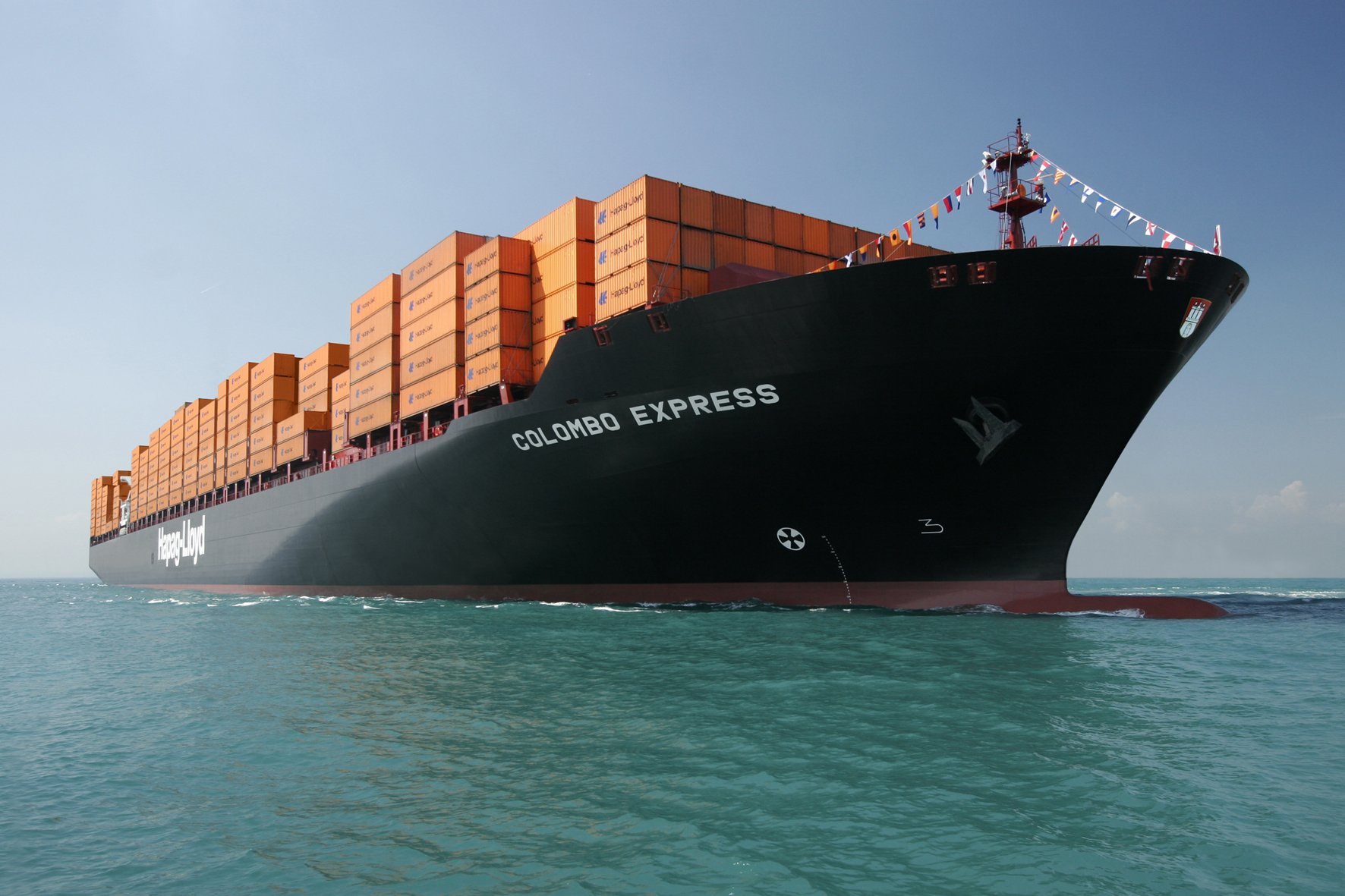
Evelien: Direct state aid for Hapag-Lloyd


After many financial institutions, manufacturers and other companies, now a first victim is cased in the container shipping industry.

The sixth-largest container ship operator Hapag-Lloyd, based in Hamburg, has become the first of its kind to receive direct state aid.

Around July, Hapag-Lloyd announced that it was seeking for fresh capital to avoid running out of cash. When Tui, a tourism group that owns 43.3 per cent of Hapag-Lloyd, sold its shares to the Hamburg-based Albert Ballin for 4.4 billion Euros, the company ran almost immediately into problems.

Aware of the consequences of doing nothing, the company decided to search for new financial sources and to restructure the organisation. Despite the urgency, this didn’t go very smoothly. There were some disagreements among the shareholders regarding the strategy. The state of Hamburg, the biggest shareholder, was pro injecting fresh money into the group.

Finally, the German government agreed to help the worldwide known shipping line. Of course this couldn’t take place without long discussions, reunion and under strict conditions.

First of all, the state guarantee only covers 90 per cent of the total of new lending facilities which Hapag-Lloyd organised with different banks. Secondly, the shareholders have to inject a further 750 million Euros. And finally Tui won’t receive any interest on its loans to Hapag-Lloyd until the loans which are covered by the government are repaid.

Since I am quite familiar with the shipping industry and transporting business, I didn’t hesitate to choose this article as source for my second blog on corporate finance.

It hurts to see how the economic crisis even affects such a big company as Hapag-Lloyd.
If Germany is willing to help the automobile manufacturers and the financial institutions, it speaks for itself that it can also help a huge company as Hapag-Lloyd, which stands for high employment, international fame and publicity for Germany.


By Evelien Van Gaeveren

Source: website of the Financial times (www.ft.com)
aricle 'Germany steps in with aid for Hapag-Lloyd'

zondag 11 oktober 2009

Soc Gen set to raise 4.8bn euros

SocGen set to raise 4.8bn euros

Summary

Because of the financial crisis many banks have loaned large sums of money from the state. Of course, the banks have to repay these loans. For many banks it is very difficult to find a good strategy. This is also the case for the french Societe generale.

Societe Generale (SG) has received 3.4bn euro from the French state to bear the financial crisis. SG has planned to raise 4.8 billion euro in a share issue to pay off the emergency loans the bank received from the French state. The bank offers two shares with a discount of 27 percent for each nine shares existing shareholders own.

The bank has said that this financial operation is also needed to pursue potential takeovers, like the 20% stake of Dexia in Credit du Nord.

SG had a decrease of 52% in profits in the second quarter in comparison with last year. However, since then the bank is improved, as the banking sector in general has started to recover.

In April, Mr. Bouthon, the bank’s chairman, left the bank because of personal attacks against him, saying these attacks could harm the bank. The departure of Bouthon was linked with the aftermath of a financial scandal centred on Jerome Kerviel, who is a rogue trader. Kerviel is accused of losing 4.9bn euro. He was charged with forgery, breach of trust and unauthorised computer use. This trial is planned for the beginning of 2010.

My opinion

I think it is terrible what has happened in the financial sector the past year. The financial crisis is caused by the banks themselves. They were irresponsible, took too many risks. Moreover, many bankers were involved in illegal activities. Jerome Kerviel is such an example. He is accused of losing 4,9 bn euro and he is charged with forgery and unauthorised computer use. The chairman of Societe Generale seemed also involved in this scandal. Eventually, he had to resign.
Because of this kind of behaviour the banks faced serious difficulties in the past year. Then the state had to intervene and grant high loans to the banks.
I think that financial criminals like Kerviel must be punished very hard and I think that banks must learn from the past crisis. I also believe that in the future the government must control the banks more severely.

Source http://news.bbc.co.uk/2/hi/business/8292200.stm

By Annelies Devos

Livine: The best industries for starting a business right now

Hello everyone!

I’ve chosen for a slideshow named ‘The best industries for starting a business right now’. It gives an overview of the best and most valuable industries at the moment. It’s not only interesting for starters but it’s also useful for companies who’d like to invest in a specific sector or company or who’d like to extend their own company. So, investments have also something to do with corporate finance.

First of all, there is the Candy-sector. Candies are things that almost everybody can afford, even in times of recession. If we look back at the launch of some classic brands like ‘Snickers’, we see that this happened in the Great Depression and ‘Snickers’ is still successful. Other examples of goods where consumers don’t cut back their expenses are beer and wine. Liquor wholesalers have also made profit, their sales have increased over the past year.

Second great opportunities are the iPhone applications. Apple is worth to invest in because it’s known all over the world and they are always searching for novelties and improvements. Apple has also launched an App Store and this store is a goal, the sales increase every month.

Thirdly, there is the Health-Care Technology. You have for example the digitalization of medical records, designing e-prescription programs, online communication with hospitals and so on. There is a lot of demand and it gives companies the chance to develop.

The Home Health Care-industry is also an example of luxury that people need and where they don’t cut back on. With the aging baby boomer generation, it’s a very lucrative sector. There is also a very big need to computer programs so that people can train themselves and do fitness-exercises at home.

In the health-sector, there is also the increase of yoga products and services. There are more doctors and therapists who suggest their patients to do some yoga.
Another possibility to invest in are the technical and trade schools. There is a lot of unemployment because of the crisis so companies can use this opportunity to invest in these schools. Temporary staffing firms are also examples of good businesses for now because of the unemployment.

The industry of the fast-casual dining has also made progress. This year, because of the crisis, there are less people who go to restaurants but they still want some luxury and convenience so they chose for fast-casual food. That’s an industry between fast food and full-serve restaurants. There are also more and more food trucks who deliver food at home.

Green constructions are also more popular these days. This sector has also made profits despite of the crisis. There are a lot companies who want to give themselves the image of an eco-friendly company because consumers like that image and that gives the business benefits.

A great opportunity for companies is the industry of niche business consulting. Niches are more specialized and give clients a more confidential feeling and that is what consumers search and need these days.

The crisis gives also a good chance for starters in accounting services. Companies always need someone to manage their accounts but in times of recession, they need them more than ever to avoid costs.

Repair services and the energy-sector made also profits because of this recession. When something is broken or a bit worn out for example a shoe, people want to repair it instead of buying a new pair to save money. It’s the same thing with energy, people search for ways to save money and to cut back their energy bill. Alternatives like solar panels have made progress last year.

I think it’s a very good slideshow because it gives a simple and quick view of good and valuable businesses and that’s interesting for companies and people who want to start a business. You know in which industry you’ll be safe at the moment and where you can make profits.

Greet,
Livine

Lien: "Gala Coral gamble on debt-equity deal"

As I already said last week, ‘corporate finance’ covers many loads and one of the aspects of corporate finance I am going to talk about today is ‘acquisition’. This week’s article is called ‘Gala Coral gamble on debt-equity deal’.

Gala Coral, one of Britain’s largest bingo chains and owner of, amongst other things, betting shops and casino’s is doing what many companies are doing now to survive. In total, Gala Coral has to pay off a debt of £ 2.6 billion. In order to do this, the private equity owners of the company will give up up to half of their interest in Gala Coral to some of their lenders, namely investment firms, in order for them to drop a large part of the loans. If the lenders agree, £ 540 million will be dropped.

The fact that Gala Coral is in this bad position has a lot to do with the recession and the fact that people aren’t allowed to smoke in public places anymore, but one of the main reasons is the fact that the state charges high taxes on gaming. There aren’t any agreements with the lenders yet, but nevertheless, the company wants to free some money to invest in the business. Gala Coral has already had to close six bingo halls this year. As they say in the article, for a lot of companies, it has been the choice between this and closing their business.

I chose this article, because it deals with some of the aspects of corporate finance, for instance the finance of their business in general. Like last week, this article illustrates how a company can get in trouble after borrowing a lot of money, but now, we can see that not only the economic crisis is at the base of it, but that also other factors can get a company in a financial crisis. For instance the fact that people aren’t allowed to smoke in public places, like casinos, anymore can lead to a loss of clientele.

Another reason that I wanted to point out this article to you, is because they illustrate a special way to get out of debts. Handing over a part of your stake in the company to the lenders seems to me a drastic way to get out of your debts, but if it means that the company can keep its doors open, then I do understand the fact that many companies take on this option. This is also why in my introduction, I said I was going to talk about ‘acquisitions’, an important part of corporate finance. By receiving shares of a company in exchange for dropping some of the debt, the investment firms are actually buying their way into the company. It’s not a full acquisition, because there are still other equity owners, but they now own part of the company.

This article can be reread on: http://www.guardian.co.uk/business/2009/oct/04/gala-coral-gamble-debt-equity

By Lien Vanneder

maandag 5 oktober 2009

Livine: Be smart in how you manage necessary price increases

This article gives seven useful tips to marketers and sellers about how they can keep and tease customers in days of recession.

1. Redefine value
Customers can look at a price in different ways, some look at the price per piece, some per ounce and some look at their monthly consumption cost. Someone who hasn’t a lot of money is tend to buy one piece of something (ex. a bottle coca-cola) while most of the time, there are packages with six bottles and that costs a dollar more but the total package ends up cheaper because you pay more for one bottle alone than when you buy a package of six bottles. Marketers can for example downsize the packages.

2. Understand your customers
This tip means that customers can respond in several ways to higher prices, so you have to make sure that you can make a customer think that your products are the best and that they respond well and that they don’t switch to another brand.

3. Use promotions
In times of recession, more consumers will look for promotions.

4. Unbundle
Make it easier for the consumers and look what they truly need.

5. Monitor trade terms
Use the last-in, first-out basis to ensure increases in your realized selling prices and not in your input costs.

6. Invest in market research
They analysis the behavior, the product usage and the price sensitivity of the consumers. You can talk face to face to the consumers to understand their needs and in this way you can see and hear how they think and what they do whit price inflation.

7. Increase relevance
You have to convince the consumers that they need your product and that they don’t have to cut back their expenditures on your products but on others.

Marketers and sellers have to make strong brands to keep their consumers, consumers are more loyal to strong brands. When your brand is too weak, you risk to lose your consumers because they will chose a cheaper variant like a private label.


I think these tips are very useful and true because in times of recession you look more at prices and you’re more price aware. When the economy is good, you can buy more but with the inflation you have to make choices, you can buy less or you chose for a cheaper variant. So when there are promotions on your usual mark, you will buy it but when there are now promotions and you think it’s too cheap for now, you don’t buy it and look for another brand or you leave it for what it is because it’s something you don’t really need.

You can find the article on: http://losangeles.bizjournals.com/losangeles/othercities/orlando/stories/2009/10/05/smallb2.html?b=1254715200^2188441&s=smc:4#

Greet!
Livine

Evelien: Bail out for Nigerian banks

One of today’s most spoken topics, the credit crunch or the financial crisis, is probably the biggest global fiasco since the last war.

When the American Federal Reserve (FED) tried to avoid recessions by pumping more and more money in the economy and offered a low interest, this eventually led to the credit crunch in the summer of 2007.

Nowadays globalisation still grows and this not only what concerns the industry but unfortunately also the financial world. The credit crunch, which started in America, soon infected the whole world.

In imitation of the American and many European governments, the Nigerian government had to bail out some of its 24 banks. The article ‘Nigeria bails out four more banks’ (source: http://www.bbc.co.uk/) teaches that even countries in the African continent have to deal with miscalculations of some banks management.
The governor of the Nigeria Central Bank Mr. Lamido Sanusi tried to clean up the system by removing the heads of Equitorial Trust, Spring Bank and Bank PHB. So, in August, Mr. Sanusi fired the heads of these banks and put in a total of 400 billion naira into Afribank, Intercontinental Bank, Finbank, Oceanic Bank and Union Bank. This measure was taken because they were all found to have very low cash reserves. Just like in America the Nigerian banks had run up bad loans.

Due to the Nigeria’s Economic and Financial Crimes Commission (EFCC), nearly $ 300 million of bad debts has been recovered, but billions are still outstanding.

I believe that just like in the rest of the world, there should be a healthy balance between giving loans and pay-backs capacities of the investors. In that way the financial risks are limited. Global you can say that there is still a lot to do to get rid of the debts and to get the economy again on a higher level.


By Evelien Van Gaeveren
link used article: http://news.bbc.co.uk/2/hi/business/8287864.stm